Protecting our clients from banking fraud



Whenever there was a suspected fraud—whether an unrecognized charge, a strange SMS, or a suspicious call—the only option was to call the bank.
Identified challenges
Total dependence on the call center.
Variable wait times.
Inconsistent experience.
No visible traceability for the user.
No differentiation between types of incidents.
Discovery
Before designing anything, we needed to understand:
What types of incidents were occurring?
At what point did the user decide to call?
What information did the bank actually need?
What were the most critical friction points?
Quantitative research
We analyzed:
Monthly call volume for fraud → 8% of total calls.
Average time to block → 15 minutes.
Ratio of calls without an actual charge (suspicion only) → 75%.
Qualitative research
Interviews and surveys with users who had experienced attempted fraud.
Listening to anonymized call recordings.
Insights
Users don’t always know whether they’ve been actual or potential victims—many call “just in case.”
Anxiety increases while waiting on the phone.
The agent acts as a manual classifier of the incident type.
Not all cases require immediate blocking.
Opportunity and challenge
The app already handled most of the clients’ daily interactions. However, at the most critical moment—security and potential fraud—the user had to leave the digital environment.
The opportunity wasn’t just to digitalize charge reporting. It was to create a flow that allowed users to report:
Suspicious communication (email, SMS, or call).
Clicking on a potentially fraudulent link.
Sharing personal information.
Sharing card details.
Unrecognized transactions.
All from a single, structured module within the app.
Solution
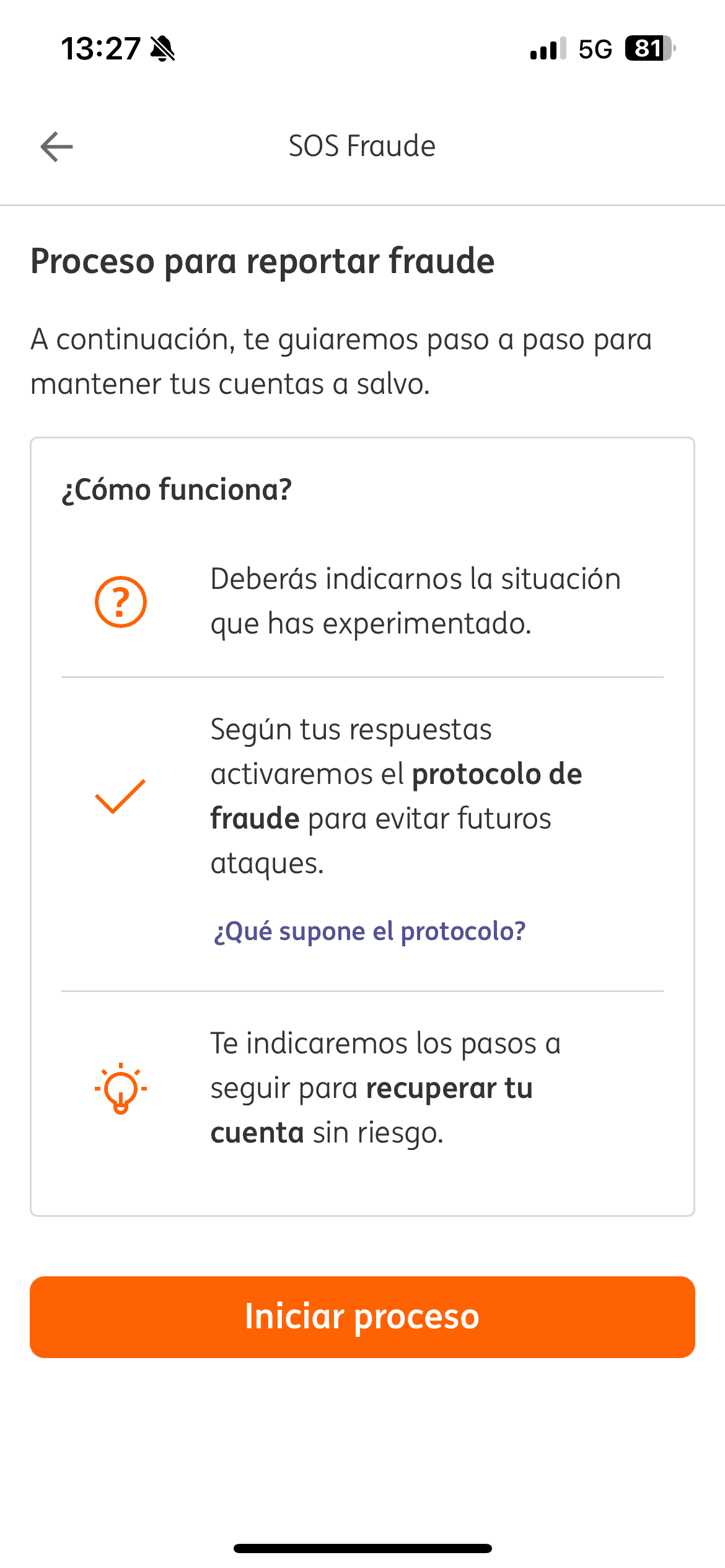
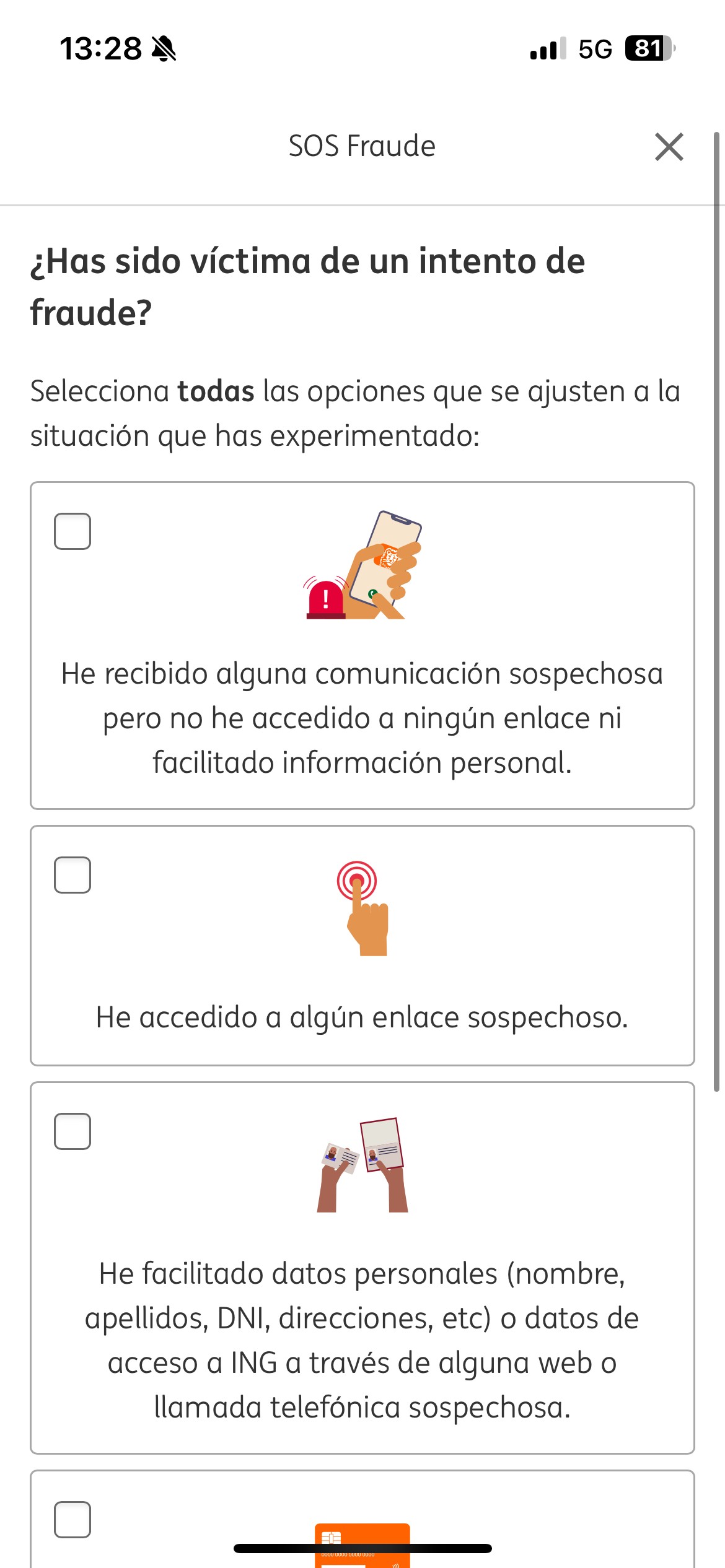
The flow starts with questions that help classify the risk and avoid unnecessary account blocking:
Have you received any suspicious communication?
Have you clicked on any links?
Have you entered card details?
Have you shared personal information or passwords?
This way, we gather key information, reduce uncertainty, and activate the appropriate protocol.
Depending on the client’s specific situation, the response varies:
Preventive education → Recommend sending the suspicious communication to the security department.
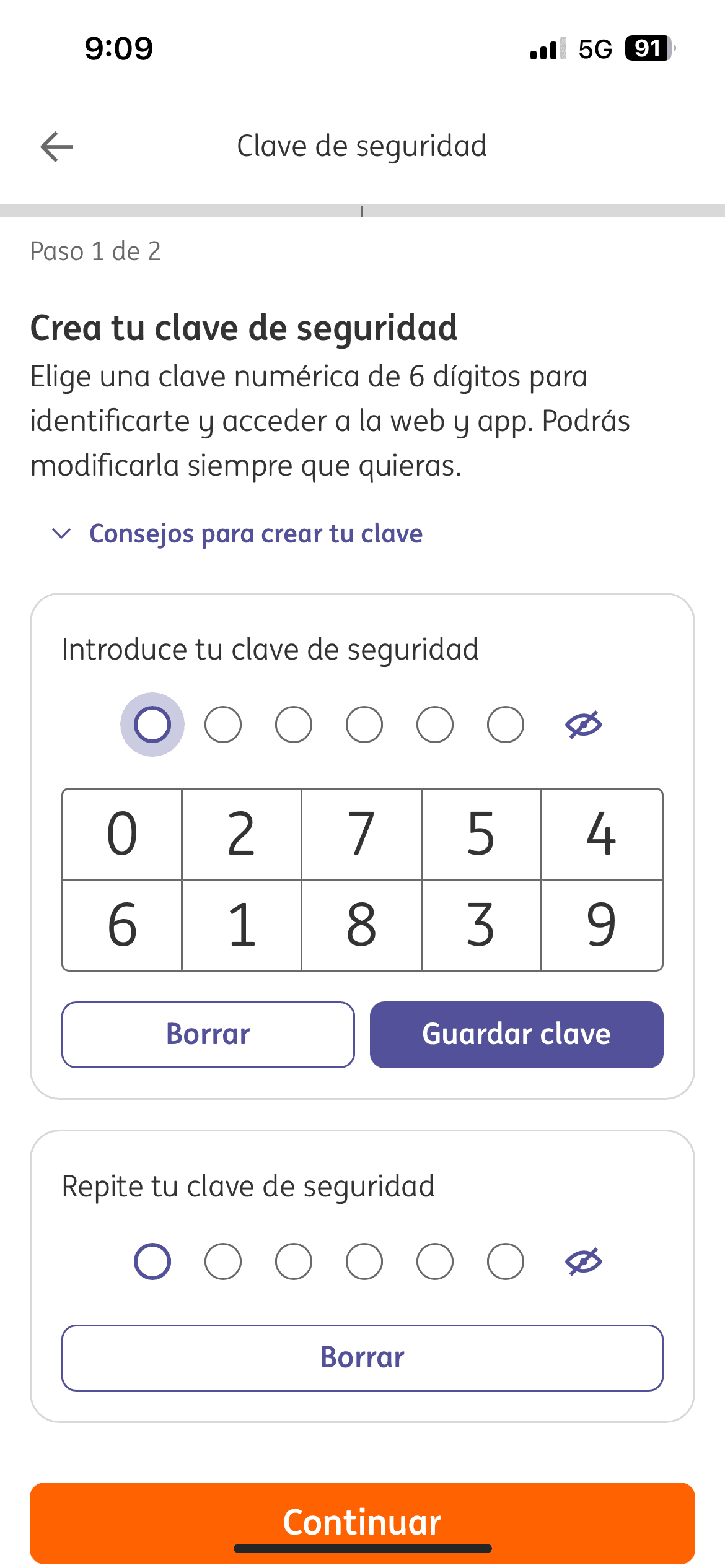
Change of access passwords.
Change of access passwords and preventive card blocking.
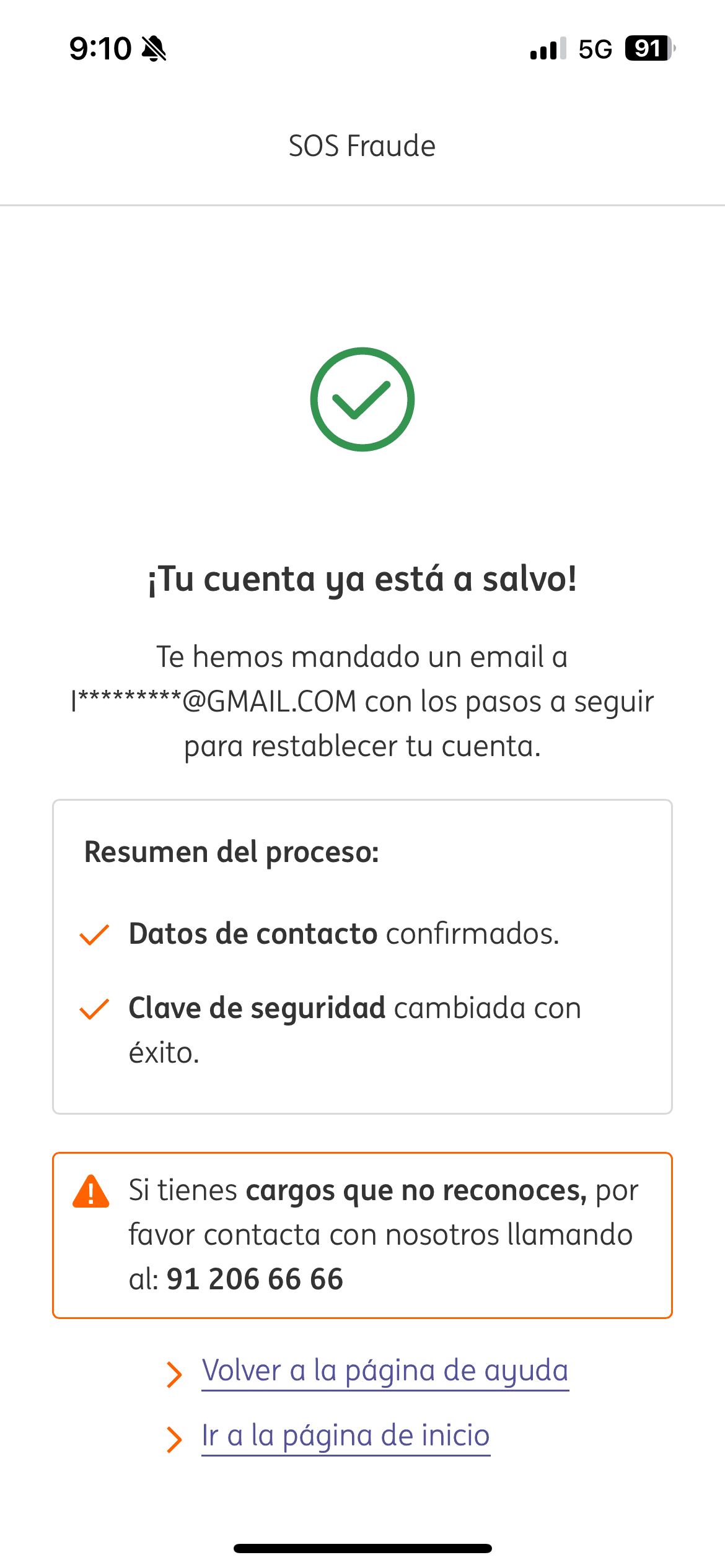
With this process, we enabled clients to feel full control over the process without having to call, eliminating uncertainty and reinforcing trust in the bank. Three months after launch, the following results have been observed:
Reduction in fraud-related calls
-40%
Average time to block
3 min
Flow completion rate
93%
NPS (process)
+15 puntos